
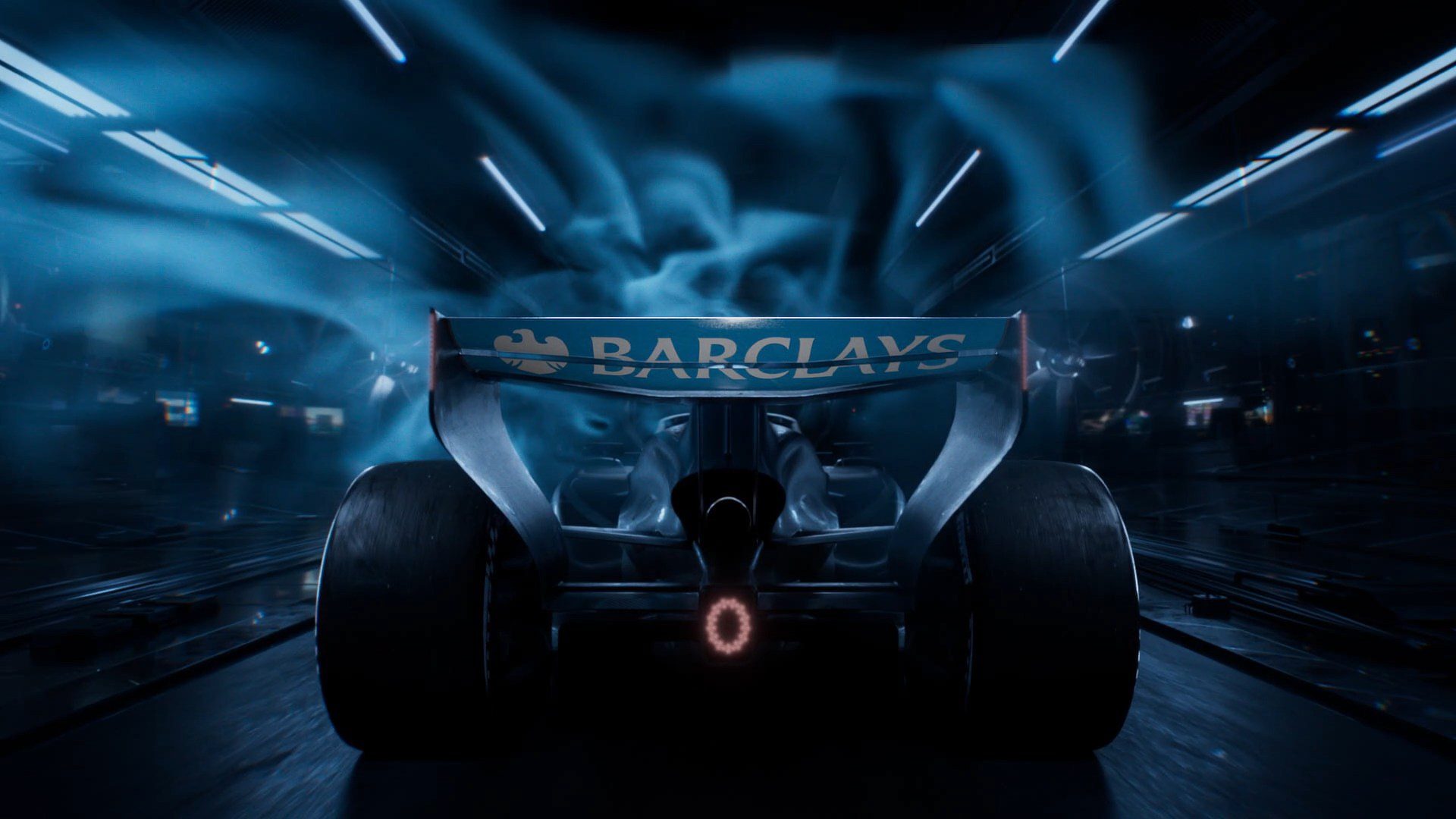
Barclays × Atlassian Williams F1
Client: Barclays × Atlassian Williams F1 Team
Year: 2026
Industry: Motorsport, Financial Services Services: VFX, CG, compositing, sound design
Formats delivered: 16:9, 1:1
Summary
Barclays returned to Formula 1 in February 2026 after three decades away, joining the Atlassian Williams F1 Team as Official Banking Partner. We made the launch spot. CAD-accurate CG of the FW48, Houdini simulation work, and a sound design that holds up at broadcast and at social autoplay. Delivered in four aspect ratios across broadcast, partner channels, paid and owned.
The work
Williams was heading into 2026 with a new car, a new title era and the biggest regulation reset in F1 in a generation. Barclays was stepping into the sport for the first time. The film had to plant Barclays inside Williams’ next chapter without losing the weight of 48 years of British motorsport history. It also had to look like a hero brand spot, not a sponsor announcement.
Problem
Williams revealed the FW48 at the Grove factory on launch day. The team skipped the Barcelona shakedown. The film had to be ready before the real car was, which meant CG instead of photography, and a model that could hold up against eventual broadcast footage.
Four formats, one craft level
Barclays’ activation runs across the UK, US, Europe, Asia and the Middle East. Broadcast, partner, paid social, owned. The spot had to deliver in 16:9, 1:1, 9:16 and 4:5 with the social cutdowns finished to the same standard as the hero.
A sponsor film that didn’t look like a sponsor film
A lot of activation work reads like a results video with a car dropped into it. This one needed to sit alongside Barclays’ main brand work, not below it.
Approach
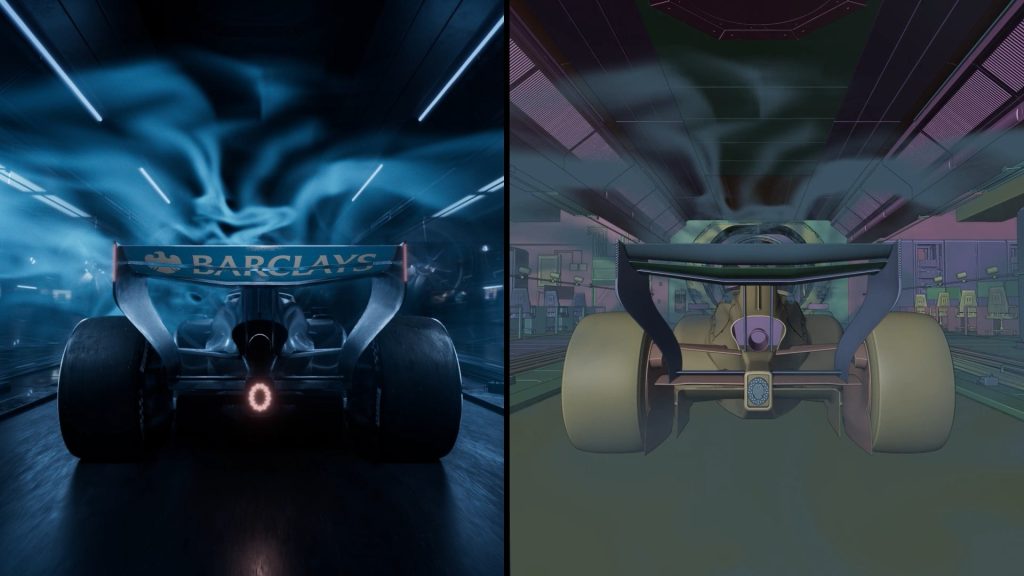
The FW48 in CG, built from CAD
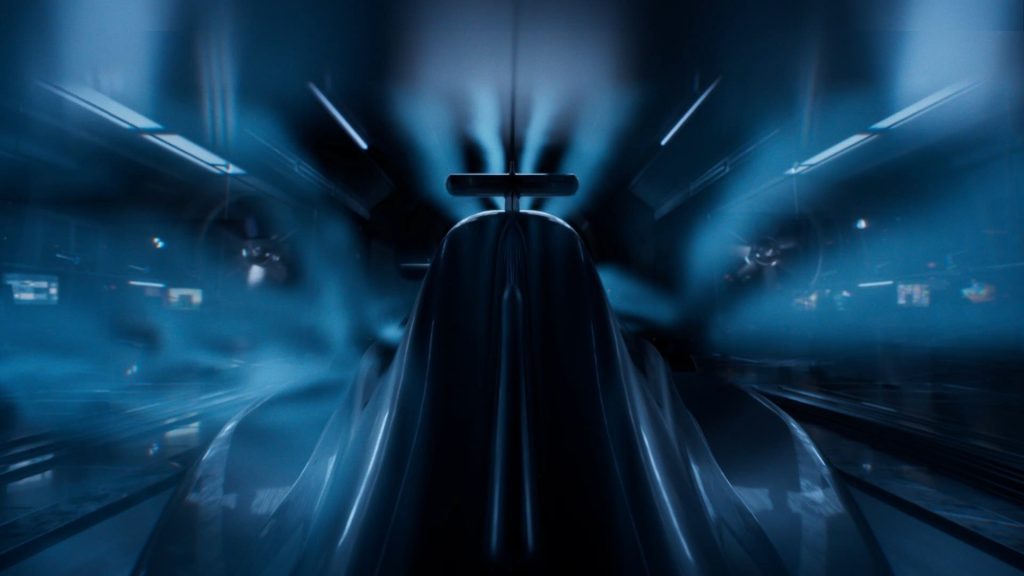
We took the team’s engineering files and rebuilt the car as a broadcast-grade CG asset. CAD gave us accuracy on every hard surface. The rest, paint behaviour, weave, rubber, the way light moves across the car under stage lighting, was built on top and tested against reference footage of the real car until every surface sat right.
Houdini Wind Tunnel
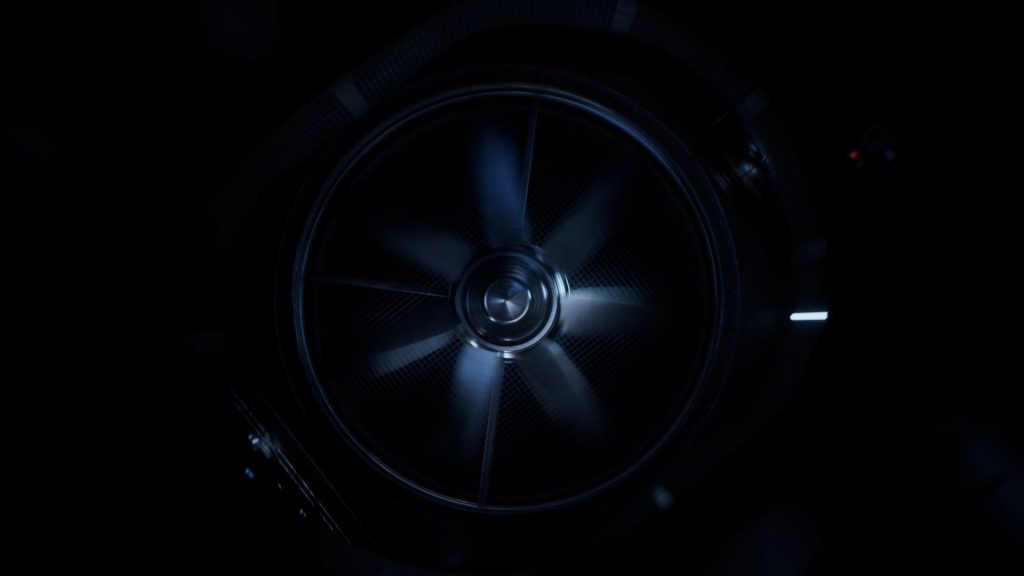
The atmosphere, wind, particulate and dynamic effects were built procedurally in Houdini. Procedural meant we could direct each beat shot by shot. It also meant the same effect could rebuild cleanly across each delivery format without falling apart.
Sound built from the cut
Harvey Gunn led the sound design. Engine notes, atmosphere, score and mix designed to carry the spot at full broadcast playback, and to hold up under muted social autoplay where most viewers actually meet it.
Format planning at storyboard
16:9, 1:1, 9:16 and 4:5 were locked into shot design from the storyboard stage, not bolted on at the end. Camera moves and graphic placement were composed to crop cleanly across all four, so the social cutdowns carry the same craft as the hero film.
How we made it
The build ran in seven stages.
Brief and creative direction. Locked the narrative, tonal territory and format spec with the creative team before any pixels were made.
CAD ingest and model build. Engineering files in, marketing-grade CG out. Hard surfaces preserved at engineering fidelity, everything else built and validated against real-car reference.
Houdini simulation. Wind, particulate and atmospheric work, all procedural so we could iterate per shot and rebuild per format.
Lookdev and lighting. Material and lighting work locked against real-car reference under broadcast conditions, so the FW48 reads as itself the moment it appears.
Compositing and integration. CG, simulation, plates and archive brought together. Grade and tonal continuity finished at this stage.
Sound design. Built from the cut. Mixed for both broadcast and muted social.
Revisions, polish and delivery. Review rounds with Barclays and Williams. Final polish. Delivered in all four aspect ratios across broadcast, owned, partner and social spec.